




AI and investment in 2026: insights for founders
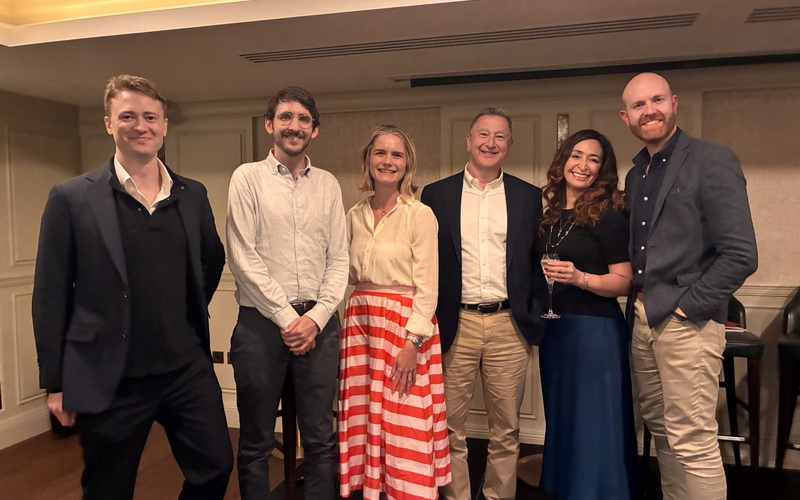
At a recent early-stage pitch event sponsored by BKL, investors from across the funding spectrum shared their perspectives on where the market is heading and what founders need to understand about the AI opportunity in 2026.
The discussion covered everything from current deal appetite and exit dynamics to founder-investor relationships, the impact of AI on the investment process, and how the ecosystem may evolve over the coming decade.
Five deeper insights from the discussion:
A market with momentum, but not without polarisation
AI remains firmly at the centre of investor attention. Activity levels have picked up and good opportunities are attracting serious interest.
At the same time, the panel highlighted a more polarised environment. Businesses with a compelling proposition and clear growth potential can still command attention, whereas weaker companies, particularly those facing operational challenges or uncertain positioning, are finding it much harder to raise funding or secure positive exits.
In practical terms, the bar for standing out has risen. Founders need to be more deliberate about how they frame their market opportunity and execution capability.
AI is reshaping investment workflows, but people still matter
AI is already changing the mechanics of investment. Processes are being compressed, and investors are increasingly using AI to support sourcing, analysis and internal decision-making.
Yet there was no suggestion that technology is replacing human judgement altogether. In early-stage investing especially, conviction is still built around people: the founder’s ability to articulate the business, build relationships, respond to challenge and inspire confidence. AI may improve efficiency, but trust and commercial instinct remain fundamental.
Founder quality and communication are under greater scrutiny
The panel was clear that founders who struggle to explain their business, market or value proposition create concern early in the process. Equally, founders who are not transparent or responsive during fundraising are unlikely to become stronger communicators after investment.
In a market where AI is raising expectations around pace and product sophistication, clarity has become even more important. Founders are increasingly expected not only to describe the opportunity well, but to demonstrate credibility in how they will execute against it.
Transparency helps build stronger founder-investor relationships
The discussion also challenged some common perceptions about investors being overly aggressive. Instead, the more nuanced message was that investors want visibility, openness and early communication when challenges arise.
Whether the issue is missed budget, slower growth, cashflow pressure or difficult operational decisions, surprises rarely help. Strong investor relationships are built when founders are candid and proactive, creating space to work through problems together rather than allowing issues to escalate in silence.
The opportunity is significant, but the rules are still being written
The most interesting theme was the balance between confidence and uncertainty.
The panel was broadly optimistic about the scale of opportunity being created by AI. This includes the emergence of new businesses, new applications and adjacent sectors such as robotics. There was also enthusiasm about the quality of innovation coming through, including from universities and specialist technology communities.
However, many of the commercial benchmarks are still unsettled. Cost structures are changing, business models are evolving and competition is intensifying more quickly than in previous cycles. For founders, that means success will depend not just on participating in the AI wave, but on understanding where durable value will sit as the market matures.
The fundamentals for founders
Overall, the panel was a reminder that while AI is changing the speed and shape of investing, it is not eliminating the fundamentals.
Investors are still looking for strong founders, differentiated propositions, transparent communication and evidence that a business can create sustainable value in a crowded market.
For businesses raising capital in 2026, those fundamentals may matter more than ever.
How BKL can help
Our team of fractional finance consultants support high-growth businesses through significant change – including fundraising, M&A and IPOs. We embed our experienced specialists within your team: shaping strategies, strengthening financial operations, supporting transactions and bringing confidence when you’re faced with complexity.
For a chat about how we can help you, get in touch with your usual BKL contact using the form below.
Contact us
Frequently asked questions: AI and investment in 2026
What are investors really looking for in AI businesses in 2026?
Investors are prioritising strong fundamentals over hype. In practice, this means that a clear value proposition, a well-defined market opportunity, and credible execution plans matter more than simply being AI-enabled.
Founders need to show how their product creates sustainable value, not just short-term interest. Evidence of traction, differentiation, and a scalable business model is increasingly important in a competitive and polarised funding environment.
How has AI changed the way investors evaluate deals?
AI has made investment processes faster and more data-driven, but it has not replaced human judgment. Investors now use AI tools for sourcing deals, analysing markets, and assessing opportunities more efficiently. However, early-stage decisions still rely heavily on qualitative factors such as founder credibility, vision, and trust. Technology supports decision-making, but conviction is still built through conversations and relationships.
Why is the funding environment described as ‘polarised’?
The funding market is polarised because capital is concentrating around the strongest opportunities. High-quality businesses with clear growth potential can attract significant interest, while weaker or less differentiated companies struggle to raise funding.
This divide reflects higher investor expectations, as well as increased competition within the AI ecosystem. Founders must work harder to stand out and demonstrate real commercial viability.
What makes a founder more investable in an AI-driven market?
Strong communication and credibility are critical. Investors expect founders to clearly explain their business model, market positioning and growth strategy.
Beyond technical capability, founders must show they can execute, adapt, and build trust. Transparency, responsiveness, and the ability to handle scrutiny during fundraising are key signals that a founder will be effective post-investment.
How important is transparency during fundraising and after investment?
Transparency is essential for building long-term investor relationships. Investors value early and honest communication about challenges such as missed targets, cashflow pressure or operational issues.
Being proactive allows investors to support decision-making and problem-solving. A lack of transparency, on the other hand, can undermine trust and make issues harder to resolve.
Are AI startups easier to fund than other types of businesses?
No, being an AI business does not guarantee easier funding. While investor interest in AI is strong, competition within the space is intense and expectations are higher. Investors are increasingly selective, focusing on businesses that demonstrate clear differentiation and sustainable value creation. Simply using AI is not enough; founders must show how it delivers a meaningful commercial advantage.
What risks should founders consider when building an AI business?
Founders should be aware that the AI landscape is evolving rapidly and remains uncertain. Cost structures, competitive dynamics, and viable business models are still shifting. This creates both opportunity and risk. Businesses that fail to identify where long-term value will sit may struggle to scale. Careful financial planning, realistic assumptions, and ongoing market analysis are essential for managing this uncertainty.
When is the right time to raise funding for an AI venture?
The right time to raise funding is when you can clearly demonstrate traction, market fit, and a compelling growth story. In a more selective environment, approaching investors too early, without a strong proposition or clear narrative, can damage momentum.
Founders should ensure they can articulate both the opportunity and execution plan with confidence before beginning formal fundraising.
Do investors prioritise product innovation or commercial viability?
Investors are increasingly focused on commercial viability alongside innovation.
While technical strength and product development remain important, they are not enough on their own. Investors want to see how innovation translates into revenue, scalability and defensible market position. Businesses that combine strong technology with a clear path to sustainable growth are more likely to secure investment.
Can professional advisers help improve fundraising outcomes?
Yes, working with experienced advisers can significantly strengthen your fundraising approach. Advisers can help refine your positioning, prepare financial forecasts, challenge assumptions and support investor communications. This improves both the clarity of your narrative and your credibility with potential investors. For many founders, external support is particularly valuable in navigating a more competitive and scrutinised funding environment.