





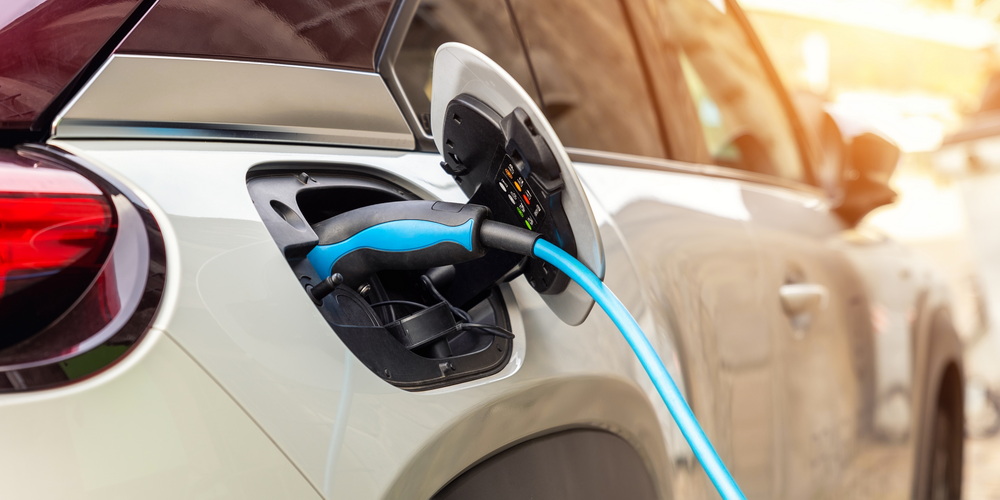
For the UK’s growing industry of electric vehicle charge point operators and third-party app operators, Charge My Street Limited v HMRC [2026] UKFTT 318 TC was a significant case.
The First-tier Tribunal concluded that VAT should apply at the reduced rate (5%) to electricity supplied to EV drivers at public charge points, and that HMRC’s policy that such supplies are standard rated may be incorrect.
Background
HMRC’s longstanding policy is stated in VAT Notice 701/19 where “supplies of electricity for recharging vehicles when using charging points situated in public places” appears in the list of “Standard-rated supplies” i.e. VAT at 20%.
Charge My Street (“CMS”), a charge point operator (“CPO”), installed and operated charging points at various places in the UK from which its customers could recharge their electric vehicles (“EV”). CMS initially charged 20% in respect of its supplies of electricity but then submitted a claim for overpaid VAT to HMRC, arguing that its supplies should be subject to the reduced rate (5%) of VAT.
A win with a cautionary tale
While the First-tier Tribunal (“FTT”) agreed in principle with CMS that its supplies of electricity to drivers could be reduced rated, the win comes with a cautionary tale. CMS paid little attention in its early stages to the wording of its agreements with third-party app operators (“3-PAO”). This had the effect that (at least in certain instances) CMS was supplying electricity not to drivers but to 3-PAOs. The latter could not be reduced rated.
The law
According to the law, 5% VAT applies to “a supply of electricity to a person at any premises… where the electricity was not provided at a rate exceeding 1000 kilowatt hours a month”.
In detail: HMRC’s arguments and the responses
HMRC argued that CMS could not benefit from the reduced rate because:
- The electricity was not supplied at “premises”
- Electricity supplied “to a person at any premises” should be interpreted as ‘at that person’s premises’
- CMS supplied electricity at a rate above 1,000 kilowatt hours per month
- CMS was not supplying its electricity directly to drivers
Premises
HMRC argued that “premises” should be interpreted as “a building”. The FTT saw no justification for reading this into the legislation, as the word could equally apply to “a defined public area such as a car park”.
To a person at any premises
According to the FTT, no level of control or interest was implied by the legislation other than the ability of the person to receive the supplies at a particular location.
Rate of 1,000KwH per month
HMRC had argued that, for agreements lasting less than a month (such as “ad-hoc” agreements as HMRC referred to them) this should be pro-rated to 33KwH per day per longstanding HMRC guidance on supplies of electricity.
CMS argued that this approach was nonsensical since boiling a standard electric kettle would consume electricity at a rate higher than 1,000KwH per month (i.e. if pro-rated for the time it takes to boil the kettle).
Again, the FTT saw no reason to accept HMRC’s interpretation. 1,000KwH per month simply was the rate and one should only look at how much electricity was supplied during an entire month.
Why agreements matter
Drivers could pay for the electricity in a number of ways:
- QR code
- Contactless payment
- Using the Fuuse app
- Using other third-party apps
When paying by QR code or contactless payment, there seems to have been little contention that CMS was supplying electricity to drivers.
Where drivers used third-party apps to pay for the electricity they used, the situation was a little more complex. In some instances the agreements and/or user terms and conditions of the apps were drafted in such a way as meant that the 3-PAOs were buying electricity from CMS and making onward supplies of that electricity to the drivers as principal.
Where the Fuuse app was concerned, the FTT accepted that errors were made in drafting the agreements/user terms and conditions and, to the extent of those errors, did “not reflect the economic and commercial reality.”
Where third-party apps were concerned, the FTT held it was possible that some 3-PAOs contracted with the drivers to supply electricity as principal. Where this was the case, then CMS was supplying electricity to the 3-PAOs and would breach the 1,000KwH per month threshold. The FTT left CMS/HMRC to agree which 3-PAOs this affected.
Our comments
It remains to be seen whether HMRC will appeal the decision or accept the decision and amend their guidance.
While irrelevant to the case and, therefore, not directly considered – the FTT decision would seem to imply that 3-PAOs could also benefit from reduced rating their supplies of electricity to drivers if they supply the electricity to the driver as principal.
What charge point operators should do next
In light of the FTT’s decision, CPOs (and, potentially, 3-PAOs) should consider whether:
- Their agreements reflect the economic and commercial reality
- They should change their VAT accounting going forward
- They are owed a VAT refund from HMRC
On this last point, it is worth mentioning that any claim for overpaid output VAT is subject to the defence by HMRC of ‘unjust enrichment’ Where it is not possible to repay the VAT overcharged to the customers, such claims tend to become complex and vigorously challenged
How we can help
The BKL VAT team can help ensure that your legal documents, including agreements with third-party operators, stand up from a VAT perspective and are optimally-worded to avoid misunderstandings with HMRC. We can also liaise with HMRC on your behalf, including representing you at tribunals.
Please speak with your regular BKL contact or Allon Greenstein using the form below.