




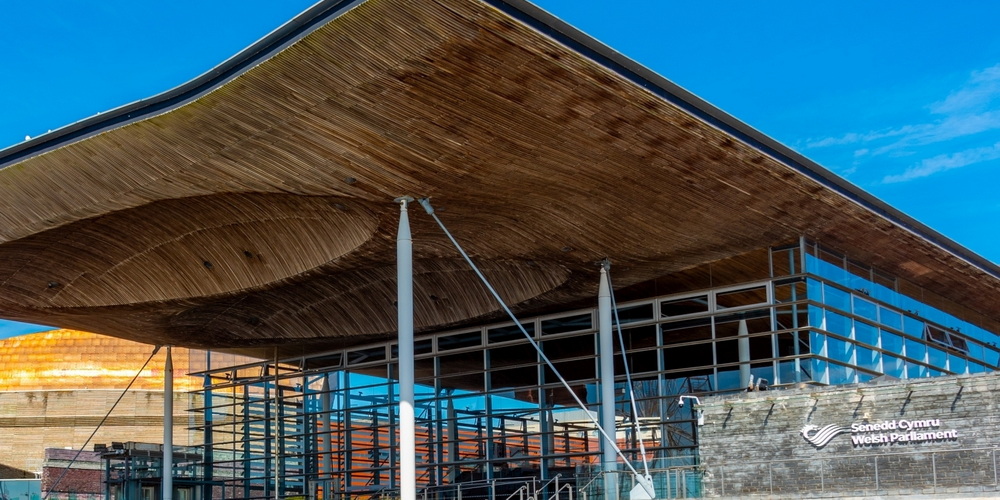
The 2026 Senedd election, to elect 96 members to the Welsh Parliament on 7 May, presents Welsh taxpayers with a clear set of policy choices across devolved taxes, particularly income tax, council tax, and business rates.
The Senedd election presents Welsh taxpayers with clear policy choices. Parties differ on income tax rates, council tax reform, business rates relief, and tourism levies – though most changes are likely to be gradual rather than immediate.
Tax proposals: summary
Income tax
On income tax, Reform UK and the Welsh Conservatives both propose reductions: Reform UK committing to a 1p cut across all bands, and the Conservatives to a 1p cut in the basic rate. In contrast, the Welsh Labour Party has committed not to increase Welsh rates of income tax, prioritising stability. The Liberal Democrats propose a temporary 1p increase across all bands to fund social care. Plaid Cymru and the Green Party have not made explicit commitments on rates, instead focusing on broader changes or increased fiscal powers.
Council tax
Council tax is another key battleground. The Welsh Labour Party and Plaid Cymru both commit to making council tax fairer. The Welsh Conservatives propose capping increases at 5% and requiring referendums for larger rises, while Reform UK proposes referendums for increases above 4.99%. The Green Party goes further, proposing to abolish council tax entirely and replace it with a land value tax.
Business rates
For businesses, all major parties acknowledge pressure within the current business rates system. Reform UK proposes a wide-ranging review and potential abolition for some sectors such as pubs, while Plaid Cymru supports rebalancing rates in favour of high street and hospitality businesses. The Liberal Democrats support extended reliefs and longer-term reform, while the Green Party proposes replacing business rates with a land value-based system.
Other taxes
Tourism taxation is more divisive. The Welsh Labour Party and Plaid Cymru support the introduction of a tourism levy, while the Welsh Conservatives and Reform UK propose scrapping it.
While inheritance tax (IHT) and VAT remain reserved to the UK Government, multiple parties, including the Welsh Conservatives, Plaid Cymru, and Reform UK, have committed to lobbying for changes, particularly in relation to family farms.
Implications for taxpayers in Wales
Overall, the election is unlikely to result in immediate, sweeping tax changes. However, it highlights an increasingly differentiated Welsh tax landscape, where political choices will have growing implications for individuals, property owners, and businesses.
Income tax: policy divergence
The clearest dividing lines between parties emerge on Welsh income tax:
- Reform UK: Reduce Welsh income tax by 1p across all bands
- Welsh Conservatives: Cut the basic rate of income tax by 1p
- Welsh Labour Party: Commit not to raise Welsh rates of income tax during the next Senedd term
- Liberal Democrats: Introduce a temporary 1p increase across all bands to fund social care
- Plaid Cymru: No explicit rate commitment; supports greater powers over tax bands and thresholds
- Green Party: No explicit commitment on Welsh income tax rates
For most individuals, the immediate financial impact is likely to be modest. However, the policy divergence is significant. Depending on the election outcome, taxpayers could see either small reductions, a temporary increase, or continued stability.
More importantly, the range of positions suggests that Welsh income tax is becoming a more actively used policy lever, increasing the likelihood of future changes.
Council tax: consensus that change is needed
All major parties accept that council tax requires a new approach, but their methods differ:
- Welsh Labour Party: Improve fairness of council tax and expand support mechanisms such as debt rescue schemes
- Plaid Cymru: Change council tax to make it fairer
- Welsh Conservatives: Cap increases at 5%, with referendums required above this level
- Reform UK: Require referendums for increases above 4.99%
- Green Party: Abolish council tax and replace it with a land value tax
- Liberal Democrats: No specific rate commitment stated
In the short term, most outcomes point to incremental change rather than immediate overhaul. However, the Green Party’s proposal. and the broader consensus on change, indicates that more fundamental restructuring is a realistic medium-term possibility.
Business rates: pressure for change across the board
There is broad agreement that business rates need to be changed, particularly to support high streets and hospitality:
- Reform UK: Conduct a root-and-branch review, including abolishing business rates for pubs and removing sector-specific penalties
- Plaid Cymru: Rebalance business rates, reducing the burden on high street, hospitality, and leisure sectors
- Welsh Labour Party: Focus on fairness, though without specific rate commitments
- Welsh Conservatives: Limited proposals beyond sector-specific measures
- Liberal Democrats: Extend reliefs, freeze the multiplier, and explore longer-term ideas such as an online sales levy
- Green Party: Replace business rates with a land value-based system
While the detail varies, the direction of travel is clear: pressure to reduce or restructure business rates will continue. Businesses should expect a mix of short-term relief measures and longer-term change.
Tourism levy and second homes
Tourism policy highlights sharper political divides:
- Welsh Labour Party: Support the introduction of a tourism levy
- Plaid Cymru: Support a tourism levy implemented with local authorities
- Welsh Conservatives: Oppose and propose scrapping the tourism tax
- Reform UK: Propose scrapping the tourism tax
- Green Party and Liberal Democrats: No explicit commitments
On second homes and holiday lets:
- Welsh Conservatives: Reduce the 182-day letting threshold to 105 days
- Reform UK: Reduce the 182-day threshold
- Plaid Cymru: Review and reassess the threshold
- Welsh Labour Party: Retain the current 182-day framework
For property owners and tourism businesses, these policies could materially affect profitability, tax treatment, and regulatory obligations, particularly where thresholds determine classification.
Inheritance tax and VAT: reserved, but politically active
Although not devolved:
- Welsh Conservatives, Plaid Cymru, and Reform UK have all committed to lobbying the UK Government on IHT, particularly in relation to family farms
- The Welsh Conservatives have also proposed piloting a reduced 5% VAT rate for tourism accommodation
No immediate changes will arise from the Senedd, but these positions reinforce that IHT, especially for agricultural and family business assets, remains an area of political focus and potential future change.
What should Welsh taxpayers do?
The 2026 Senedd election does not point to immediate, radical tax change. However, it does underline a clear trend: Wales is developing a more distinct and politically responsive tax system.
For taxpayers, the key risk is not a single policy change, but the increasing complexity and divergence of the system over time. Staying informed, and taking advice where appropriate will be essential.
Regardless of the outcome of the Senedd, we recommend these practical steps:
- Monitor developments in Welsh income tax policy, particularly if you are a higher-rate taxpayer or business owner
- Review your property ownership structures in light of potential council tax and second home implications
- Assess your exposure to business rates and sector-specific policies
- Keep IHT planning under review, particularly for family businesses and agricultural assets
How BKL can help
Our specialists in personal tax, business tax, trusts and estate planning have decades of experience guiding Welsh clients through the tax implications of policy changes. Our office in Cardiff enables our locally-based trust & tax specialists to meet with families, businesses and trustees in person.
For a chat about how we can help you, get in touch with you regular BKL contact or Ryan Bevan using the form below.